
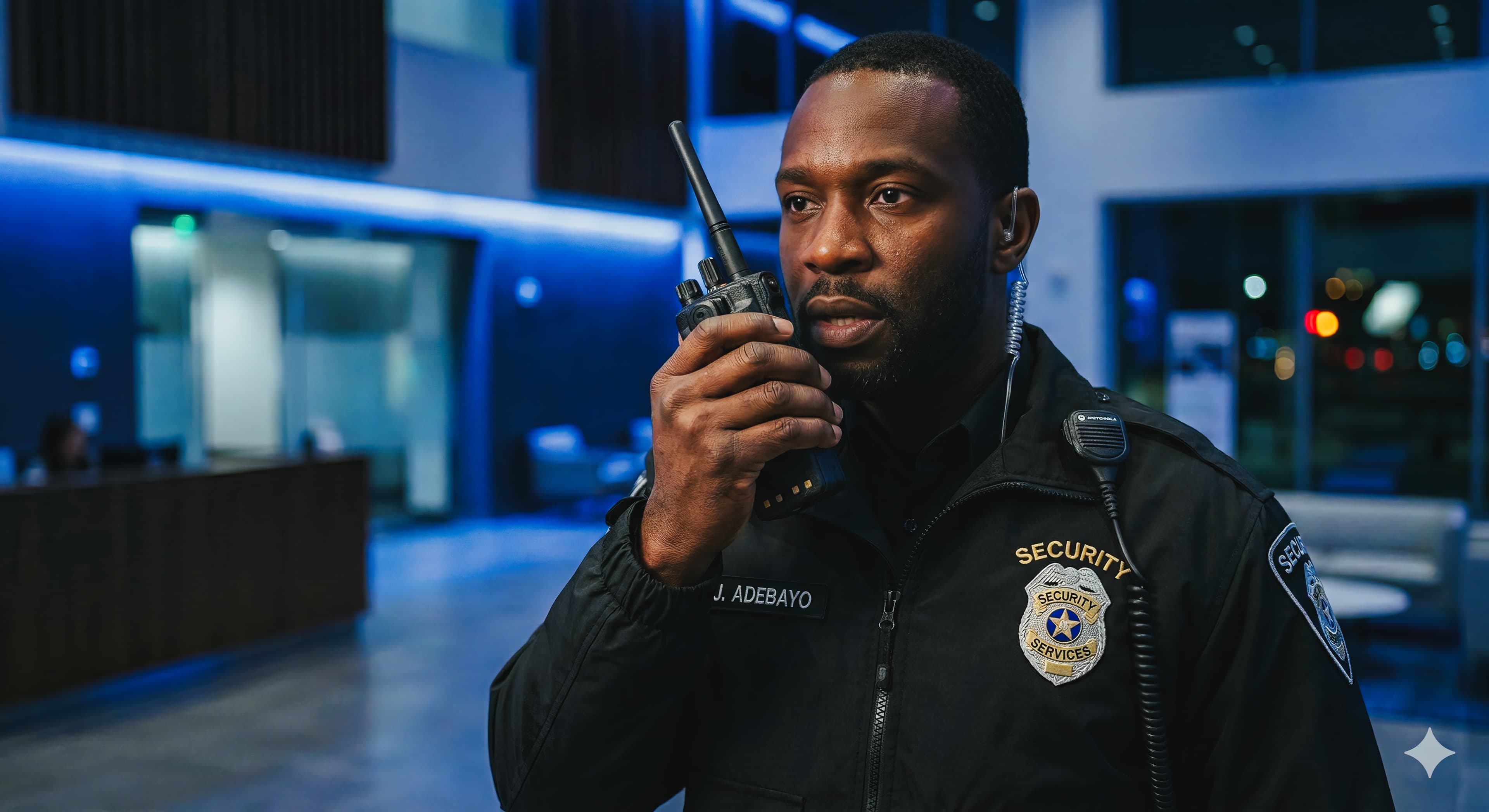
Commercial Property Security Requirements in California: What Owners Need to Know
Overtime Security Team
Operations
Why California Is Different
California regulates private security more thoroughly than most states. The Bureau of Security and Investigative Services (BSIS) under the Department of Consumer Affairs governs security guard licensing, and failure to use licensed officers can expose property owners to significant liability.
If you own or manage commercial property in California, this is what you need to know.
Guard Licensing Requirements
Every security guard working in California must hold a Guard Card issued by the BSIS. This requires:
- Completion of an 8-hour Powers to Arrest course before beginning work
- Completion of a 16-hour training course within the first 6 months of employment
- A background check (criminal history review)
- Registration with the state
Armed guards must additionally obtain an Exposed Firearm Permit and qualify with their firearm through a BSIS-approved course.
As a property owner, you have the right — and arguably the obligation — to ask any security provider to verify that all officers deployed to your property hold current, valid Guard Cards. This is verifiable through the BSIS public license lookup.
What Happens If You Use Unlicensed Guards?
If an incident occurs on your property and it comes to light that the security officer involved was unlicensed, you face multiple exposure points:
- Civil liability — the injured party may name you directly for negligent hiring of an unlicensed provider
- Insurance complications — your liability carrier may dispute coverage if the security provider wasn't properly licensed
- Regulatory exposure — depending on the circumstances, the BSIS can pursue action against the property owner as well as the security firm
The safest position is to document the license status of every officer deployed to your site and include a contractual requirement in your security services agreement.
Minimum Requirements for Effective Commercial Coverage
Beyond licensing, California commercial properties typically benefit from:
Access control:
- Defined entry and exit points with documented visitor logs
- Controlled access to parking structures, especially after hours
Patrol frequency:
- Interior and exterior patrols at documented intervals
- GPS or timestamped check-in records
Incident documentation:
- Written reports within 24 hours of any event
- Photographic evidence where applicable
- A clear chain of custody for reports
Emergency protocols:
- Defined escalation paths for fire, medical, and security incidents
- Coordination with local law enforcement when appropriate
Getting Started
If you're evaluating security coverage for a California commercial property, start by requesting proof of BSIS licensing from any vendor under consideration. Then look at their operational infrastructure — how they handle callouts, how they document incidents, and what supervision looks like.
Contact Overtime Security for a compliance-focused assessment of your property →
Ready to secure your operation?
Our team is available 24/7 for consultation and deployment.