Not All Security Is the Same
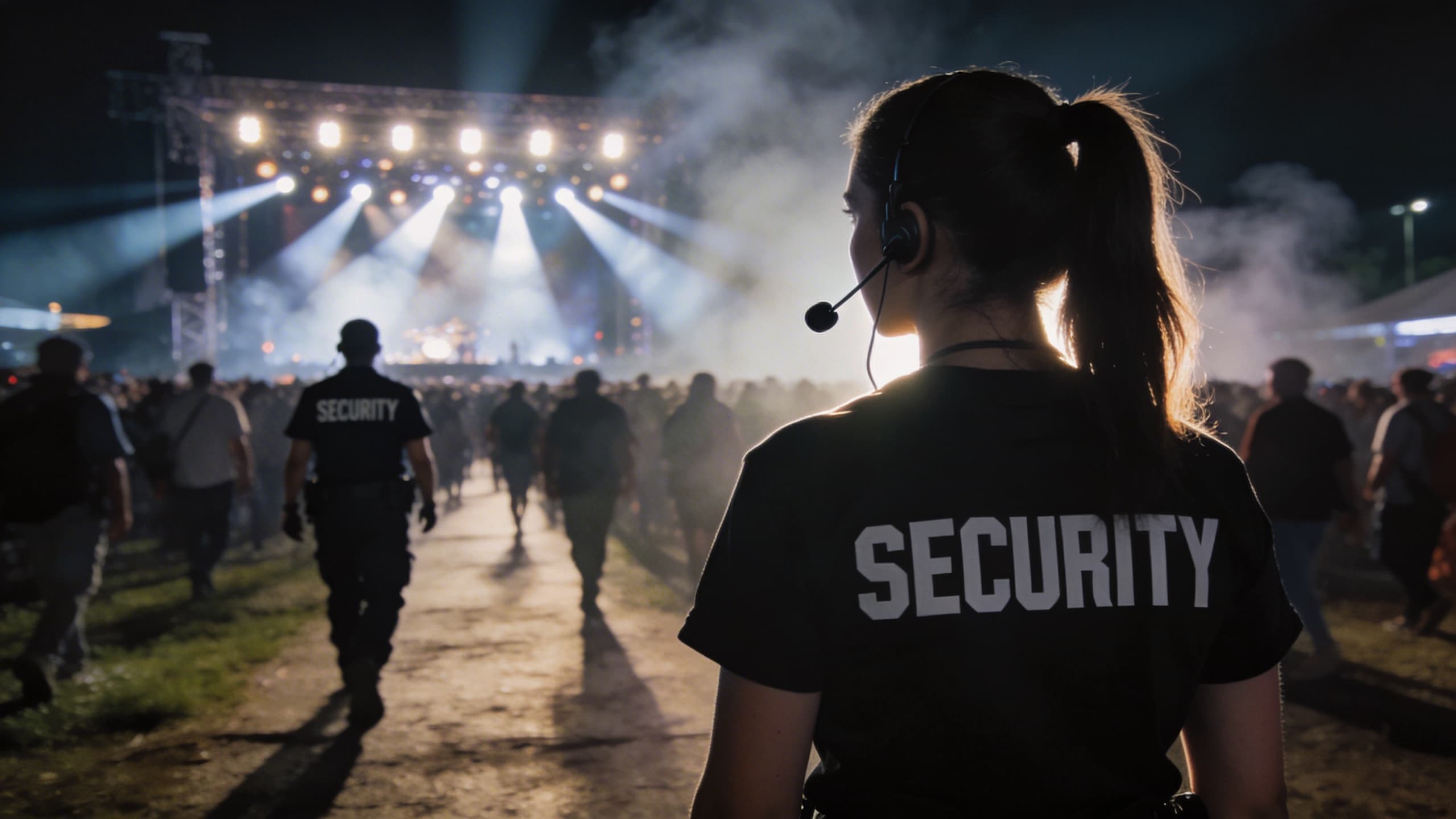
A retail guard's primary job is deterrence and access control. A residential patrol officer watches for signs of intrusion and enforces community rules. But event security operates on a completely different set of variables — crowd density, alcohol, time pressure, ingress and egress flow, and the constant tension between guest experience and incident prevention.
If you're planning an event and you're tempted to call your regular guard company, read this first.
The Core Challenges of Event Security
1. Crowd Flow and Ingress/Egress
Events are defined by concentrated movement at specific times — doors open, the show ends, the speech finishes. Security must be positioned to manage these moments without creating chokepoints that become safety hazards.
This requires pre-event planning: calculating the number of entry points needed for your expected attendance, positioning officers at high-density zones, and having a clear plan for emergency evacuation.
2. Access Tiers
Most events have multiple access levels: general admission, VIP, backstage, production, press. Each boundary requires a different credential check and a different officer briefing.
Officers who don't understand the tier structure will either turn away people who belong or let in people who don't. Both outcomes create problems.
3. Alcohol and Crowd Behavior
Alcohol is present at the majority of private and corporate events, and it changes the security calculus significantly. Officers need specific training in de-escalation, identifying signs of intoxication, and intervening early — before a situation becomes an incident.
The goal is never to escalate. The goal is to resolve quietly and quickly.
4. Visible Deterrence vs. Guest Experience
Corporate event clients often want security that's firm but invisible. Concert promoters may want a visible perimeter. Private parties have their own culture and expectations. Event security officers need the judgment to calibrate their presence to the environment.
This is a trained skill, not an instinct.
What to Look for in an Event Security Provider
When evaluating a vendor for event work, ask:
- Do they have specific experience in your event type (concerts, corporate, private, sporting)?
- Can they provide a staffing plan with officer-to-attendee ratios?
- Do they conduct site walkthroughs before deployment?
- What is their protocol for ejecting a guest without incident escalation?
- Do they coordinate with local law enforcement or emergency services when needed?
The answers will quickly distinguish firms that do events as a side service from firms that specialize in them.
Overtime Security's Event Approach
Our event security protocols begin with a site walkthrough and a staffing plan tailored to your venue, your attendance, and your specific risk profile. Every officer receives a site-specific briefing before the event begins, and a supervisor is always present for events above a threshold size.
Request a quote for your event →